
Your body is not a problem to solve. It never was.
But most of us have stood in front of a mirror in an outfit that looked beautiful on someone else — and wondered what was wrong with us. Nothing was wrong with you. The outfit was simply cut for a different shape than yours.
That is what dressing for your body type is really about. It’s not about shrinking yourself into a shape you were never meant to be. Just learning which lines, which waist placements, which silhouettes love your body back — and then reaching for those, on purpose, one soft choice at a time.
You do not need a new wardrobe. You do not need to change everything at once. Most of what follows works with clothes you already own.
How to Find Your Body Type
Before anything else, stand in front of a mirror in something fitted — a dress, leggings and a close top, whatever lets you actually see your shape. Look at three places: your shoulders, your waist, and your hips.
If your shoulders and hips are about the same width and your waist is clearly narrower, you are most likely an hourglass. If your hips are wider than your shoulders, you are most likely a pear. If you are fuller through the middle with slimmer legs, you are most likely an apple. If your shoulders, waist, and hips are all fairly straight and even, you are most likely a rectangle. And if your shoulders are broader than your hips, you are most likely an inverted triangle.
That is all it takes. No tape measure required, though you can use one if you like — measure around the fullest part of your bust, the narrowest part of your waist, and the widest part of your hips, and compare the three numbers the same way.
One more thing, and it matters: most women are a blend of two shapes. You might be an hourglass with pear hips, or a rectangle with an apple middle. That is completely normal. Dress the shape that is most obvious, and borrow what you need from the other. These are starting points, not boxes.
1. Hourglass — Let the Waist Be Seen
How to spot it: your shoulders and hips are balanced, and your waist is clearly defined — the classic curved silhouette.
What flatters you: anything that follows your waist instead of hiding it. Wrap dresses, belted waists, fitted tops, high-waisted skirts and trousers. Soft fabrics that drape and follow your lines will always look better on you than stiff ones that box you in.
What to avoid: shapeless, boxy cuts. Oversized shirts and straight shift dresses swallow the waist — the very thing that makes your shape beautiful — and leave you looking wider than you are.
Outfit formulas to try:
- A wrap dress with knee boots — the wrap defines the waist and the boots keep it grounded.
- A fitted knit tucked into a high-waisted midi skirt — soft on top, defined in the middle, flowing below.
- A belted blouse with wide-leg trousers — the belt does the work, the trousers balance the line.
This is the same idea behind the hourglass silhouette in my autumn styling — it is not about being a particular size. It is about letting the waist be seen, and letting the rest of the outfit flow from there.
2. Pear — Balance the Top, Soften the Bottom
How to spot it: your hips are wider than your shoulders, and your waist is defined. Your lower half carries the softness.
What flatters you: anything that adds gentle presence to your upper half and lets your lower half flow. Boat necks, off-shoulder tops, structured shoulders, and details at the neckline all draw the eye upward. A-line skirts and wide-leg trousers skim the hip beautifully.
What to avoid: clingy bottoms that grip the hip, and heavy detail — big pockets, bold patterns, stiff embellishments — sitting right at the widest point.
Outfit formulas to try:
- A boat-neck top with an A-line midi skirt — the neckline widens the shoulders, the skirt floats past the hip.
- A structured blazer over dark straight-leg jeans — the shoulders balance the hips, the dark denim keeps the line long.
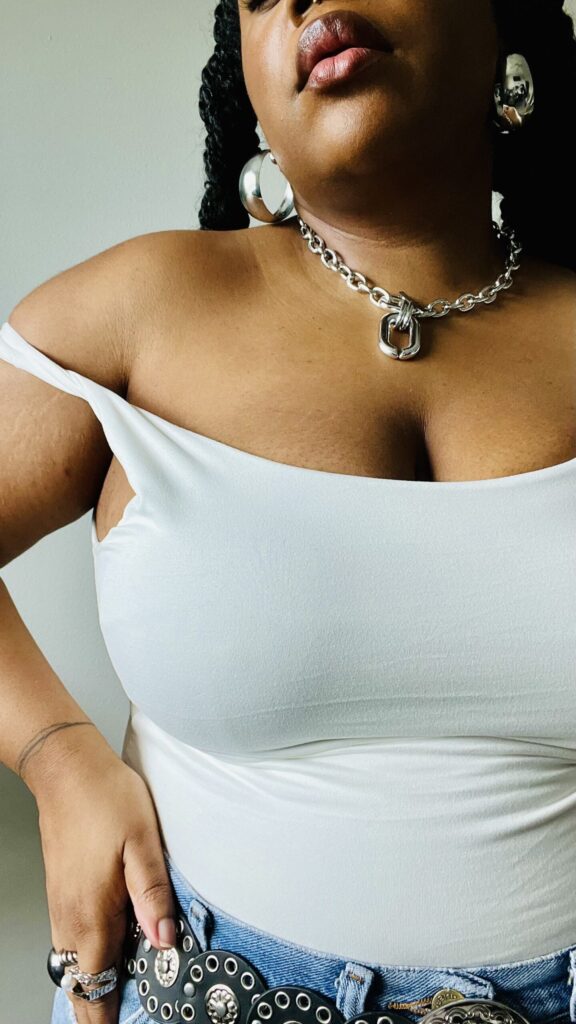
- An off-shoulder blouse with wide-leg trousers — soft at the top, flowing below, nothing clinging anywhere.
3. Apple — Elongate the Middle, Show the Legs
How to spot it: you are fuller through the middle, with a less defined waist — and usually lovely, slim legs.
What flatters you: anything that creates a long, open line through the torso. Empire waists that sit just under the bust, V-necks that lengthen the chest, flowy tunics, and straight-leg trousers. Your legs are an asset — let them show.
What to avoid: tight waistbands and belts cinched at the waist, which only draw attention to the very place you would rather soften. Stiff, boxy tops that add bulk are no kinder.
Outfit formulas to try:
- An empire-waist dress with ballet flats — the waistline sits high, the skirt flows, the legs do the talking.
- A V-neck tunic with straight-leg trousers — the V opens the chest, the straight leg keeps everything long.
- A flowy blouse, half-tucked, with tailored pants — the half-tuck gives shape without squeezing anything.
4. Rectangle — Create Curves Where You Want Them
How to spot it: your shoulders, waist, and hips are all fairly even — a straight, athletic silhouette with little waist definition.
What flatters you: anything that creates the suggestion of a waist. Peplum tops, belted shirt dresses, ruffles, and layered textures all add softness and shape where your lines run straight. You can wear volume in a way other shapes cannot — use it.
What to avoid: shapeless straight cuts that add nothing. A straight dress on a straight silhouette just disappears — you need one element that gives the eye a curve to follow.
Outfit formulas to try:
- A peplum top with slim trousers — the peplum flares exactly where a waist would be.
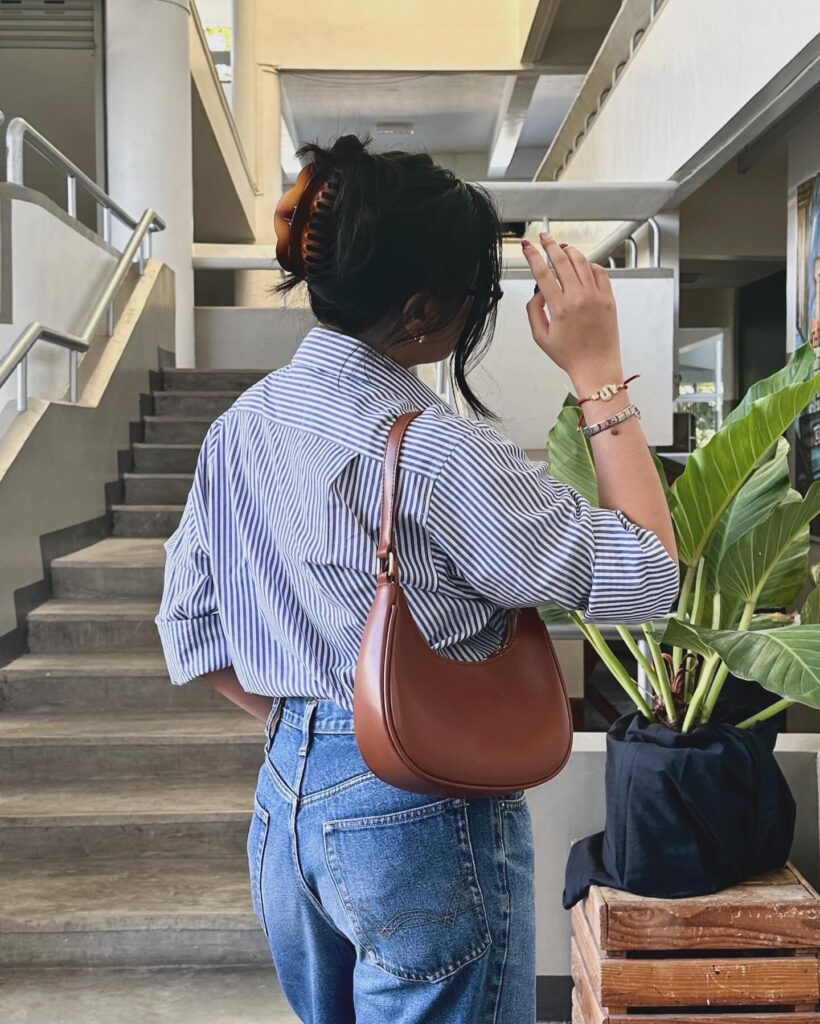
- A tucked in shirt with high rise jeans — the tuck in creates the waist, the jeans do the rest.
- A ruffled blouse with an A-line skirt — softness on top, shape below, curves suggested everywhere.
5. Inverted Triangle — Soften the Shoulders, Fill the Bottom
How to spot it: your shoulders are broader than your hips, with a narrower lower half. Your upper body carries the strength.
What flatters you: anything that softens the shoulder line and adds fullness below. V-necks, soft draped tops, A-line skirts, wide-leg pants, and flared jeans all balance you beautifully. Keep the top simple and let the bottom half have the volume.
What to avoid: shoulder pads, heavy shoulder detail, and halter necks that widen the top even further. Anything stiff or structured at the shoulder works against you.
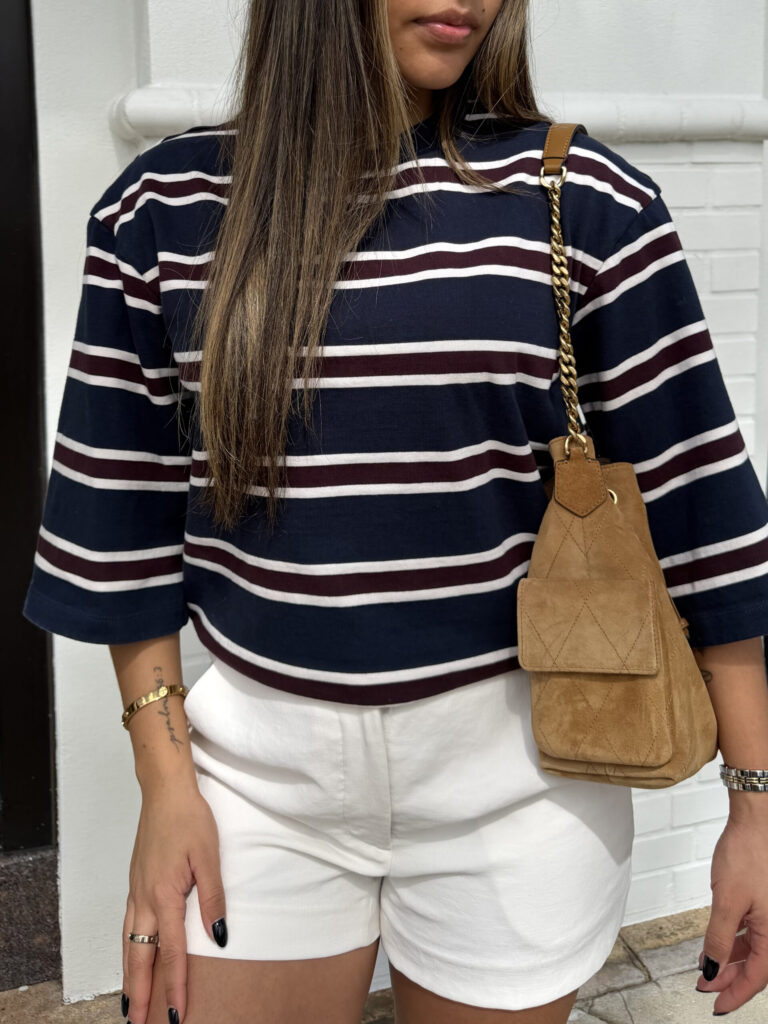
Outfit formulas to try:
- A soft draped top with linen shorts — the V narrows the top, the skirt fills the bottom.
- A V-neck top with wide-leg trousers — gentle up top, generous below, perfectly balanced.
- A fitted top with flared jeans — the flare adds exactly the width your hips need.
The Rules That Flatter Every Shape
Whatever your shape, four things always matter more than any rule in this post.
Fit first. No shape, texture, or colour will save an outfit that does not fit. The right fit is not about size — it is about how clothes feel on your body. Tailor the pieces you love most. Take in the waist of a dress that is nearly perfect. Hem the trousers that pool at your ankle. A ten-minute alteration can turn something you never reach for into the thing you wear every week.
Balance the volume. If the top is full, keep the bottom slim. If the bottom is wide, keep the top fitted. One volume at a time is the rule that keeps every outfit looking intentional.
Let fabric drape. Soft fabrics that move with you — silk, fine knits, fluid crepe — flatter every shape. Stiff fabrics that stand away from the body hide your lines instead of following them.
Stop fighting your body. Dress the body you have, in the shapes that love it back. That is the whole secret, and it is the kindest one in this post. If you want the fuller version of this idea, how to dress more feminine goes into the same feeling from a different angle — soft shapes, gentle textures, and your own version of it.
Frequently Asked Questions
What body type am I if I am between two shapes?
Most women are. Dress the shape that is most obvious — the one you see first in the mirror — and borrow what you need from the other. If you are an hourglass with pear hips, take the hourglass waist and the pear’s A-line skirts. The shapes are starting points, not boxes.
Can I wear a wrap dress if I am not an hourglass?
Yes. A wrap dress flatters almost every shape, because the tie lets you place the waist exactly where yours is. Pears, apples, and rectangles all wear wrap dresses beautifully — the tie adjusts to you, not the other way around.
Do I have to follow these rules strictly?
No. They are a starting point, not a law. If you love something that breaks a rule and you feel beautiful in it, wear it. The rules are there for the days you do not know what to wear — not to police the days you do.
What if my weight changes and my shape shifts?
Then your shape shifts, and your formulas shift with it. That is normal, and it is not a failure. Revisit the mirror, notice what has changed, and dress the body you have today. Your closet should serve the woman you are now, not the one you were last year.
Discover Your Archetype
The way you dress is part of the way your feminine energy expresses itself. If you want to understand your own expression more deeply, take the Feminine Archetype Quiz to discover whether you lead with the Maiden, the Mother, the Wild Woman, or the Queen — and let the way you dress reflect more of who you already are. If you want to read about all seven archetypes first, the guide to feminine archetypes is a gentle place to begin.
A Final Word
You do not need a different body. You only need clothes that were made for the one you have — shapes that follow your waist, lines that balance your shoulders and hips, fabrics that move the way you do.
Get dressed tomorrow like the woman you already are is worth dressing well. She is.
And if you want the softness to live beyond your closet, these feminine self-care rituals are a gentle place to begin. And before you even open the closet, a slow morning helps — a few daily feminine energy practices and a simple skincare routine are a soft way to begin.
