
You’ve built the life, the career, the independence, the capability that everyone quietly admires. And yet, somewhere underneath the competence and the full calendar and the thing you always handle yourself, there’s a low hum of exhaustion that never quite goes away. You’re solving problems in your sleep. You’re holding everything together at work and at home. You’re doing it all, and doing it well, and wondering why none of it feels like enough.
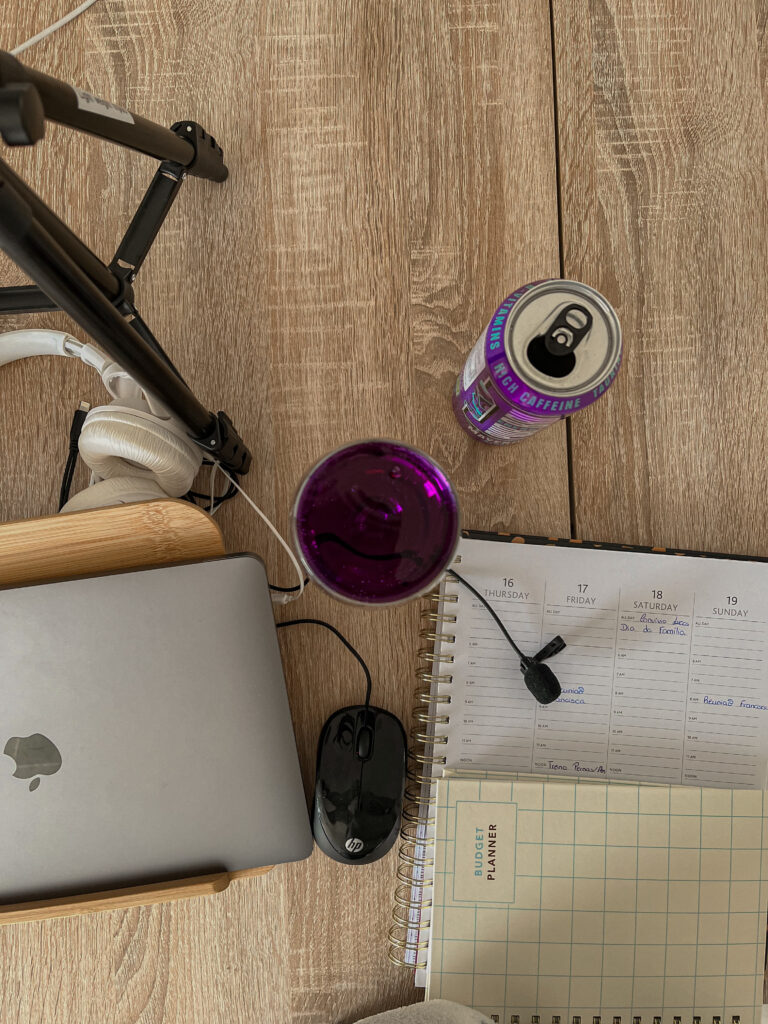
That’s not a productivity problem. That might be an energy problem.
If you’ve ever asked yourself, how do I know if I am too much in my masculine energy as a woman, you’re not alone, and the fact that the question is surfacing matters. Here’s what’s worth understanding before we go further: masculine and feminine energy aren’t about gender. Within this framework, most people express both agentic, goal-directed traits and more receptive, restorative ones. Masculine energy moves, directs, achieves, and protects. Feminine energy receives, flows, feels, and restores. Neither is better. Both are necessary. The question worth asking isn’t whether you have masculine energy. It’s whether masculine energy has quietly become your only mode, less a conscious choice and more a survival strategy you never actually signed up for.
At FemAura, this is the heart of what we explore: not how to make women smaller or softer in a way that costs them their power, but how to help women come home to the full version of themselves. The part that leads and rests. The part that achieves and feels. The part that’s been running the show from one register for so long that everything else has gone quiet.
The 13 signs below aren’t a verdict. They’re a mirror. Look honestly, see what reflects back, and ask yourself what it’s costing you.
What it actually means to be “too much” in your masculine energy as a woman
Let’s be clear about what this isn’t. Being in your masculine energy doesn’t mean you’re doing something wrong. Ambition isn’t a flaw. Competence isn’t a problem. The women who identify strongly with these signs are often some of the most capable, reliable, deeply admirable people in any room. The issue isn’t the strength. The issue is when strength becomes the only key you know how to use, even when it’s not the right door.
For many women, high masculine energy isn’t ambition. It’s armor. It developed in environments where slowing down felt dangerous, where asking for help led to disappointment, where being the one who holds it together was simply what survival required. That’s not a character flaw. It’s an adaptation. A very effective one, until it isn’t.
The yin-yang framework used in coaching and wellness discourse, it’s a conceptual model rather than a standardized psychological construct, isn’t about balance for its own sake. It’s about access. When the scale tips so far in one direction that the other side becomes unreachable, something always suffers: the body, the relationships, the quiet inner knowing that you’re running on fumes dressed up as discipline.

The behavioral signs you’ve over-indexed (signs 1-5)
1. You need to control everything around you
This one shows up as micromanaging, needing the final word, struggling to delegate even tasks that don’t require your hand on them. It looks like competence to the outside world. From the inside, it’s exhausting. Clinically, therapists and researchers often interpret the need for constant control as the nervous system’s attempt to stay safe in an unpredictable world, an adaptive response to perceived threat, rooted in attachment and trauma literature. It is also one of the most common signs of over-indexed masculine energy.
2. Hyper-independence feels like a personality trait
When “I’ve got it” becomes a reflex rather than a preference, something worth examining is happening. Women who have leaned hard into masculine energy often find that accepting help triggers genuine discomfort. Receiving starts to feel like weakness. Asking feels like failure. Attachment research has linked this kind of hyper-independence to avoidant attachment styles shaped by early experiences where relying on others led to disappointment or rejection, though patterns can overlap and vary across individuals. It’s less “I prefer to do things myself” and more “I don’t feel safe letting anyone else do it.”
3. Your to-do list never ends, and somehow that feels like the point
Productivity as identity. Busyness as proof of worth. This isn’t just a time management pattern; it’s an energetic one. When rest feels unearned or even anxiety-inducing, the body has lost its relationship with simply being. The doing has filled every available space, not because there’s so much that genuinely needs doing, but because stopping feels scarier than staying busy.
4. You move through conversations like a project manager
Direct, solution-focused, sometimes impatient. There’s a meaningful difference between assertiveness and dominance: one is clear and confident, the other closes the door before anyone else gets to speak. Women in this pattern are often in “fix it” mode without realizing it, jumping to answers before the other person has finished describing the problem. It’s efficient. And it leaves people feeling unheard.
5. Asking for help is the absolute last resort
The internal script sounds like: “If I want it done right, I have to do it myself.” This sign pairs closely with difficulty trusting others and a quiet belief that relying on anyone is a liability. The exhaustion this creates is real and cumulative, and it rarely lifts, because the one thing that would actually help, receiving support, feels too risky to try.
How to tell if you’re too much in your masculine energy as a woman: the emotional signs (signs 6-9)
6. Emotional numbness has become your default setting
Feeling flat, consistently “fine,” or oddly cut off from your own inner life is a sign that something has been suppressed for a long time. Over-indexing into logic and forward momentum doesn’t make feelings disappear. It just makes them harder to access. Chronic emotional suppression is associated with higher rates of anxiety and depression, and research points to links with cardiovascular markers such as blood pressure reactivity, though most of these findings are correlational rather than causal. The body registers what the mind tries to set aside.
7. Vulnerability feels physically uncomfortable
When someone asks how you’re really doing, notice what happens in your body. The urge to deflect, minimize, or pivot to practicalities is information. This isn’t just a communication habit. It’s a sign that the body has built a wall around softness because softness once felt dangerous, unproductive, or simply unavailable as an option.
8. Rest makes you feel restless and guilty
Stillness that triggers anxiety rather than relief is one of the most consistent patterns in women who have been operating in high masculine energy for extended periods. Rest doesn’t restore them because their nervous system no longer recognizes it as safe. Slowing down doesn’t feel like recovery. It feels like falling behind.
9. You live more in your head than in your body
Analyzing, strategizing, planning, replaying. The intellect becomes a highly functional shield against the messiness of feeling. If you find yourself more comfortable in a spreadsheet than in a conversation about how something actually felt, this sign applies. Overthinking is often what happens when the body’s emotional signals have been overridden so consistently that the mind stops checking with them.
How it shows up in your relationships (signs 10, 13)
10. You’re the strong one in every relationship, and you quietly resent it
Being the person everyone leans on but no one holds is one of the most exhausting places to live. This isn’t about capability, it’s about being locked into a role where your own need, softness, or uncertainty is never allowed to show up. The resentment, when it surfaces, is the clue. It’s telling you that something important has been missing for a long time.
11. Closeness makes you want to pull back
Difficulty receiving love, care, or genuine intimacy is a hallmark pattern when feminine energy has been sidelined for too long. This shows up as pulling away after a moment of vulnerability, dismissing affection, or keeping conversations at the surface level even with people you genuinely care about. It isn’t coldness. It’s protection that has overstayed its welcome.
12. Friendships feel more like networking than connection
If your friendships mostly revolve around what everyone is doing rather than how everyone is actually feeling, this sign applies. Masculine energy in social settings can make relationships feel transactional or performance-oriented without any conscious intention. The depth is available. It just requires a mode most high-achieving women have stopped tuning into.
13. In conflict, you go straight to problem-solving before anyone feels heard
Jumping to solutions is efficient. It’s also a signal that emotional receptivity has taken a back seat to forward momentum. Partners and friends can walk away from a conversation with a perfectly reasonable solution feeling completely unheard, because what they needed first wasn’t an answer. It was to be met where they were. This pattern costs relationships more than most women realize.

Why so many modern women end up here
Sociological analyses of the “girlboss” era of the 2010s document a consistent message: lead hard, feel later. Assertive and driven behavior was rewarded professionally, while softness was quietly framed as a liability, a dynamic cultural critics and burnout researchers have linked to emotional distancing and professional exhaustion. Women didn’t drift into masculine energy overdrive on their own. They were guided there: by workplaces, by hustle culture, by the tension between independence and the parts of femininity that weren’t deemed useful enough to keep. Many women didn’t choose this pattern. They were shaped into it.
For others, the roots go deeper than career culture. High masculine energy as a chronic default is often built on a foundation of self-protection. Childhood environments where vulnerability wasn’t safe, relationships where showing need led to disappointment, or years of chronic stress that required constant performance can all wire the nervous system toward control and self-sufficiency. Attachment research associates this pattern with the avoidant style, in which a person maintains a stable self-image partly by keeping others at a comfortable distance, though individual patterns vary, and some people show overlapping features of both avoidant and anxious attachment. It’s not a flaw in character. It’s a flaw in how safety was taught.
How to start rebalancing without losing your edge
The first move isn’t to overhaul anything. It’s to notice. Start observing which mode you’re in at any given moment without making it mean something about you. Are you choosing this directness right now, or is it autopilot? Is this productivity energizing or numbing? Simple awareness, practiced through journaling, mindfulness, or even a midday pause to ask “how does my body actually feel right now”, is where the shift begins.
From there, add practices that actively invite the nervous system toward receptivity and presence:
These aren’t passive activities. They are active recalibration, practices that support nervous system regulation, increased receptivity, and a rebuilt connection to your body’s signals. Like any practice, they work through repetition, not perfection.
FemAura is where this work lives and breathes. If you recognized yourself in these signs, there’s a full library of resources here waiting: practical guides on feminine energy restoration, grounded femininity practices, emotional healing, and the kind of deep, warm conversation that helps women move from surviving on one setting to living on the full spectrum. Recognizing the pattern is the beginning. The next part of the journey doesn’t have to be walked alone.

Coming home to yourself
Over-indexing into masculine energy isn’t a character flaw. It’s a pattern, and patterns can shift. If reading this list felt uncomfortably familiar, that recognition is actually a good sign. It means you’re paying attention to something your body has been trying to tell you for a while.
Rebalancing doesn’t mean becoming less. It means becoming more: more present, more available to yourself and the people you love, more capable of leading from a place that doesn’t cost you everything. The driven, capable, fiercely independent woman you are isn’t going anywhere. She’s just getting a collaborator, the one who knows how to rest, receive, feel, and flow.
So if you’ve been asking yourself, how do I know if I am too much in my masculine energy as a woman, this list is your starting point. The feminine vs. masculine energy balance isn’t about becoming a different person. It’s about reclaiming the full range of who you already are. The deeper question, the one worth sitting with, isn’t just whether these signs fit. It’s what it would feel like to finally let some of them go. Your feminine energy isn’t separate from your strength. For most women who find their way back to it, it turns out to be the very source of it.
Frequently asked questions
How do I know if I am too much in my masculine energy as a woman?
Common signs include difficulty resting, chronic hyper-independence, emotional numbness, pulling back from intimacy, and living primarily in planning or problem-solving mode rather than in the present moment. If several of the 13 signs above resonate, your masculine and feminine energy balance may be worth examining.
Is being in masculine energy bad for women?
Not at all. Masculine energy, drive, focus, decisiveness, is valuable and necessary. The concern arises when it becomes the only available mode, crowding out rest, emotional connection, and receptivity. The goal is access to both, not the elimination of either.
How do I rebalance masculine and feminine energy?
Start with awareness: notice when you’re in automatic-drive mode versus genuinely choosing it. Then add small, consistent practices, slow breathing, gentle movement, unstructured creative time, and allowing yourself to receive support, that invite your nervous system toward a more receptive state.
